Can You Actually Make Money from AI-Generated Music on Spotify, or Is It Just a Hobby?
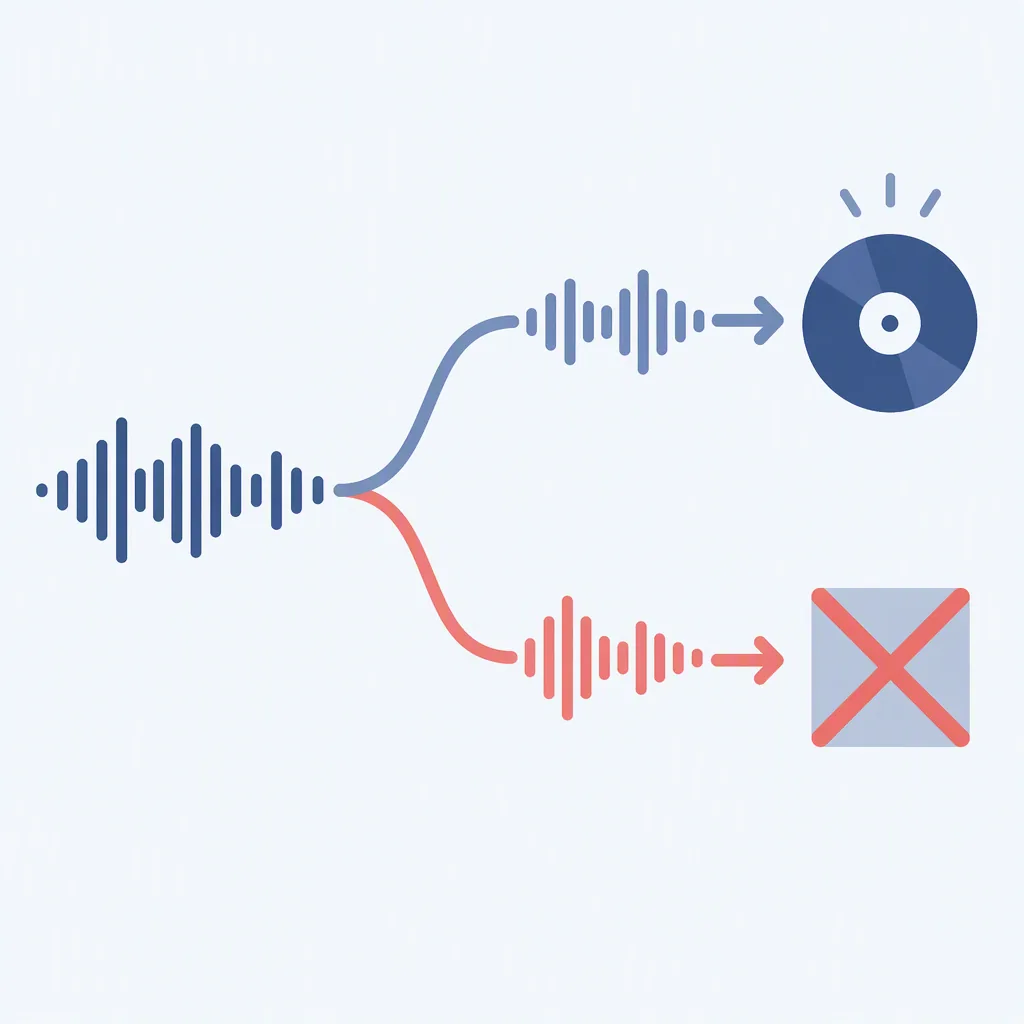
Some people do earn from AI-generated music on Spotify, but the path is harder than the headlines suggest — and the difficulty is not the AI. The split in real creator conversations is not "real musicians vs hobbyists." It is between people who treat a release as passing four specific gates and people who skip them and then wonder why the track earns nothing or gets pulled.
What real creators actually report
Open the discussions where working AI-music creators talk to each other — not the marketing pages — and you find two camps that both contain real people.
- The "streams are a dead end" camp argues that AI music floods the catalogue, so individual tracks get buried and per-stream payouts never add up to meaningful money for most uploaders.
- The "very good money is possible" camp reports real earnings on Spotify, but is quick to add that the channel is broken in a way that makes outsiders assume it cannot be done. Their point is not that it is easy — it is that the people earning are doing something the casual uploader is not.
A working DIY musician with around twenty years in the game adds the context that this was already true before AI: after the economics of streaming changed, steady income from streams alone was rare for independent human artists too. The AI part changes the volume of competition, not the underlying maths.
What separates the hobby from the income
The tool you used to make the track is not what decides whether money shows up. What decides it is whether the release clears the four gates that determine if a track stays live long enough to earn anything. These are the same four gates used in the 12-point Spotify pre-upload checklist — rights, disclosure, metadata, delivery.
| Gate | Why it decides income | What fails it |
|---|---|---|
| Rights | If you cannot prove you control the recording, distributor takedowns kill revenue before it starts. | Unlicensed stems, inputs you cannot account for, vocal identity you cannot defend. |
| Disclosure | Honest AI-use declarations keep you inside platform policy; hiding it risks removal and forfeited royalties. | A fully generated track described as a human performance. |
| Metadata | Wrong artist names or genre tags bury the release in search, where no one finds it. | An artist name one letter off an established act; a wrong language or mood tag. |
| Delivery | A mastered file that fails loudness or cover-art checks never goes live. | Clipping masters; cover art you do not hold the rights to. |
The creators who report real money treat these gates as the actual job and the generation as the easy part. The ones who skip them end up with removed tracks and a story that "AI music doesn't pay" — which, for that release, happens to be true.
Why streams alone usually disappoint
Streaming pays per stream to whoever holds the rights to the recording, and there is no separate payment category for generated audio. What platforms police hard is the behaviour around the streams: bought plays, playlist-placement schemes, and self-play farms get a release removed regardless of how it was made. For AI uploaders, the extra risk is catalogue flooding — releasing large volumes of near-identical filler reads as spam, which suppresses reach before royalties ever matter. Releasing like a catalogue (distinct titles, real durations, sane spacing) is the unglamorous fix.
The model that is not streaming
An alternative revenue structure is emerging alongside streaming: tokenizing songs on public chains such as Solana turns the product from "a stream that pays fractions of a cent" into "direct ownership interest someone can buy." That is a different business with its own legal and platform questions — not a replacement for getting the four gates right on Spotify, but worth knowing it exists so you are not betting the whole plan on one payout model.
Where to go next
If the question is "can it pay," the useful answer is "only if the release survives." Work the four gates before you upload, not after a rejection. The full walkthrough — the rights ledger template, the disclosure decision table, and the late failures that pull tracks after they go live — is in the 12-point pre-upload checklist.
Sources: creator discussions on Reddit communities r/aiMusic, r/artificial, and r/popculturemix, March–September 2026. Figures here are reported experience, not audited earnings; treat them as signal about process, not as a income promise.
See the checklist in action: watch the 12-point pre-upload checklist as a YouTube Short.