Writing Lyrics an AI Can Actually Sing
Keep each line to roughly six to ten syllables, start lines on vowels or simple consonants, mark sections with [Verse] and [Chorus] tags, put a comma wherever a singer would breathe, and respell every invented word the way it sounds. Those five moves fix the large majority of garbled AI vocals, because the failure is rarely the voice model. It is a line carrying more syllables than the phrase can hold, a consonant stack the singer cannot attack cleanly, or a run-on line with no phrasing marks anywhere in it. Below is the syllable band that works per style, the sound patterns that survive being sung, a copy-paste lyric template, and a checklist you can run over any set of words before you spend a generation on it.
Why a well-written line still comes out as mush
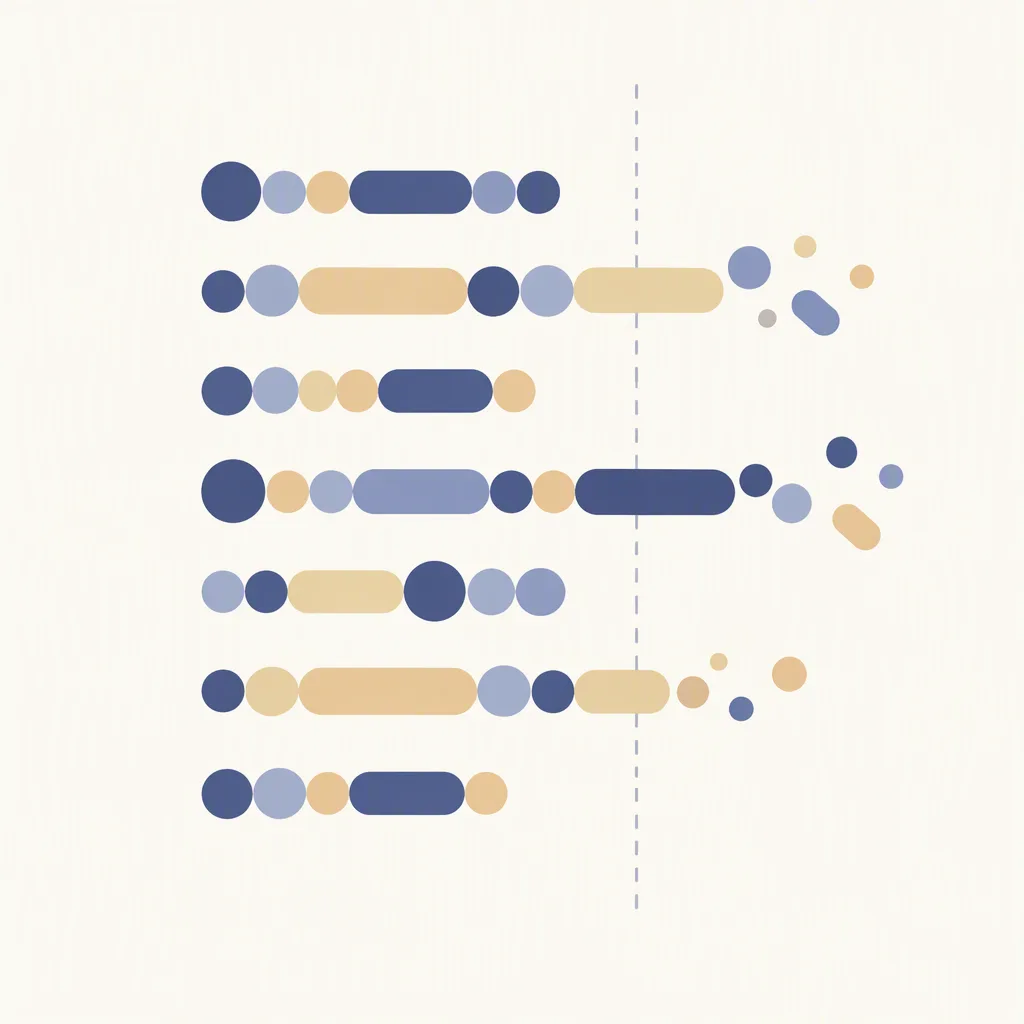
A lyric that reads beautifully on the page can be nearly impossible to sing, and an AI voice has all the same physical limits a human singer has plus one extra: it is not reading for meaning. It is mapping symbols to sounds and then fitting those sounds into a melodic phrase it invented at the same time. Three things go wrong, and they are worth separating because each has a different fix.
- Syllable overload. A melodic phrase in a given style holds a limited number of syllables. Hand it more than it holds and something has to give: the model rushes the middle, drops the tail, or blurs several syllables into one noise. The words are still in the prompt; they simply do not fit in the tune.
- Attack difficulty. Some consonant patterns are hard to start a note on. A line that opens with three consonants in a row forces the singer into a consonant cluster at the exact moment it needs a clean pitch. The result is a slurred onset, which is what most people describe as mumbling.
- Phrase uncertainty. With no section tags and no punctuation, the model has to guess where one musical phrase ends and the next begins. Its guess rarely matches where you would have taken a breath, and the line ends up breaking in the wrong place.
The useful consequence is that all three are properties of the text you wrote, not of the tool. You can fix them before you generate, at the cost of about ten minutes with a draft.
The syllable band: how much fits in one line
The single highest-leverage change you can make to a lyric is to shorten lines into the band the style can carry. Count syllables the way a singer does, by saying the line out loud, not by counting words. A line of four long words can easily carry more syllables than a line of nine short ones.
| Style | Syllables per line | What happens when you go over |
|---|---|---|
| Sparse ambient, slow ballad | 5 to 8 | The line is clipped mid-phrase, or the last words arrive late and rush. |
| Standard pop vocal | 6 to 10 | Syllables start merging; consonants at line ends disappear. |
| Rock, belt, gospel | 7 to 11 | The singer runs out of phrase and the tail drops out entirely. |
| Folk, singer-songwriter, storytelling | 8 to 12 | Acceptable if the line is clearly punctuated; risky without commas. |
| Hip-hop, rap, spoken cadence | 12 to 20 | Expected. These styles are built for density; phrasing marks matter more than length. |
| Chant, children's, hook repetition | 4 to 6 | Overloading breaks the call-and-response feel the style depends on. |
Two refinements make the band much more useful in practice.
Keep lines inside one section roughly even. A verse with lines of six, seven, nineteen, and five syllables gives the model four different problems to solve at once. Aim for lines within two syllables of each other inside a section, and let the difference between sections carry the variety instead.
Put your longest syllables where the music can hold them. Open vowels on a long note sound fine. Three consonants on a long note sound like a stumble. If you know a word will land on a sustained note, prefer a word built around a vowel.
The sounds that survive a sung line
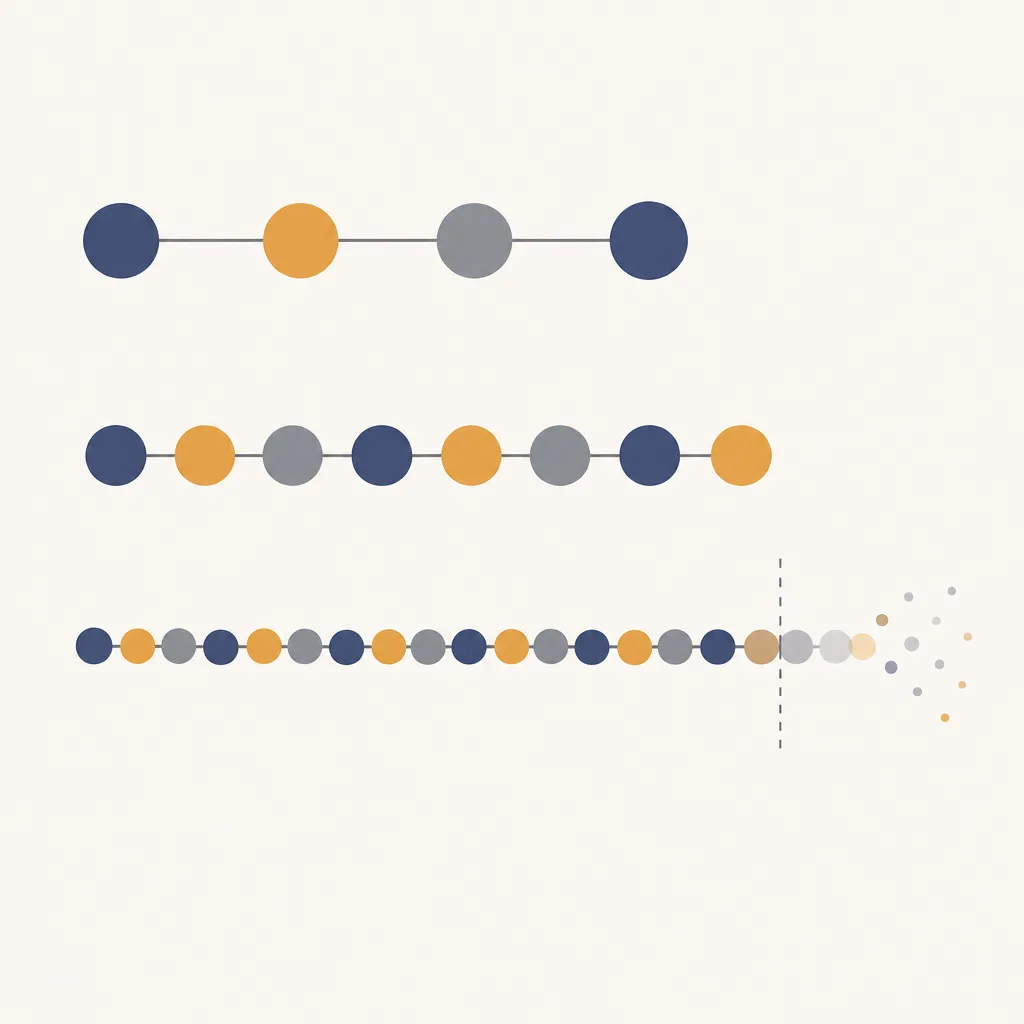
Beyond raw count, the shape of the sounds decides whether a line lands. The table below lists the patterns that most often cause trouble and the move that fixes each one. You do not need to eliminate every one of these from a lyric; you need to avoid stacking several of them into the same line.
| Pattern | What goes wrong | The move that fixes it |
|---|---|---|
| Three-consonant onset (str-, spl-, scr-, thr-) | Slurred note attack; the first syllable loses its pitch. | Rewrite the line to start on a vowel or a single consonant. |
| Closed consonant endings (-ngth, -sts, -xt, -sk) | The final consonant is dropped, so the rhyme disappears with it. | End the line on an open vowel or a soft nasal. |
| Sibilant pile-up (three or more s, sh, z sounds in one line) | Hissing and lisping; consonants smear across the whole phrase. | Swap one word for a non-sibilant synonym. |
| Vowel collision across a word edge (hiatus) | Two vowels run together and the word boundary vanishes. | Insert a light consonant, or break the line between the words. |
| Stacked unstressed function words | The line becomes rhythmically shapeless and the beat drifts. | Cut the filler; keep one strong word per beat. |
| Acronyms and initialisms | Read as a letter sequence or as a nonsense word. | Spell out the sound you want, or write the full phrase. |
The general direction to aim for is vowel-forward lines: alternating consonant and vowel, ending on a vowel or a hum, with the hard consonant clusters pushed into the middle of a line rather than the start or the end. That is also, not coincidentally, how most singable pop lyrics are written.
Invented words, names, numbers, and other pronunciation traps
Any string the model has rarely seen has to be guessed at, and the guess is frequently wrong. This is the most common cause of a single unintelligible word sitting in an otherwise clean vocal. The fix is to stop asking the model to guess and hand it the pronunciation instead.
| Trap | Why it fails | How to respell it |
|---|---|---|
| Invented place or character names | No learned pronunciation; the model picks one at random. | Spell it phonetically in the lyric line, exactly as it should sound. |
| Brand or product names | Read as a common word, often with the wrong stress. | Use a generic word instead, or respell it the way a speaker says it. |
| Numbers, years, quantities | May be read as digits, as a full word, or split oddly. | Write the number out in words. |
| Abbreviations and initialisms | Read letter by letter, which eats the syllable budget. | Write the full phrase, or the spoken form. |
| Foreign proper nouns in an English line | English phonetics get applied to a non-English word. | Approximate the sound in English spelling. |
| Words you want stressed unusually | Default stress lands on the wrong syllable. | Capitalise the stressed syllable, or split it with a hyphen. |
Two notes on technique. First, respelling is a change to the lyric text you submit, not to your final published credit — keep your intended spelling for the release metadata and use the phonetic version only as the input the voice reads. Second, some tools accept an explicit pronunciation hint in the lyric field, along the lines of a bracketed note next to the word. Support varies by tool and changes over time, so check what your generator documents before you rely on it; if it is supported, it is the cleanest fix for a stubborn proper noun.
Structure tags and punctuation are phrasing instructions
The model is not only deciding how to sing your words, it is deciding where one musical section ends and another begins. Section tags are the cheapest way to control that, and punctuation is the cheapest way to control the smaller breaths inside a section.
| Tag | What it signals | Notes on use |
|---|---|---|
| [Intro] | Opening material before the first verse. | Keep it short or instrumental; lyrics here are often swallowed. |
| [Verse] | New words, same music as the previous verse. | Keep syllable counts near-identical across verses. |
| [Pre-Chorus] | Build toward the chorus. | Good place for shorter lines and rising tension. |
| [Chorus] | The repeated hook. | Repeat the text verbatim every time; do not paraphrase. |
| [Bridge] | Contrasting material, usually once. | The safest place to try an unusual line length. |
| [Outro] | Closing material. | Short repeated phrase works better than new content. |
Punctuation inside a section does the fine work:
- Comma — a short breath. The most useful mark you have; use it where you would inhale.
- Line break — the end of a musical phrase. Two lines are two phrases, whatever the syllable count says.
- Period — a full stop and a longer gap. Use sparingly; too many periods make a section feel chopped.
- Ellipsis — a trailing phrase. Useful at the end of a line you want to hang in the air.
- Capitalisation — emphasis. A capitalised word tends to be attacked harder.
- Hyphen — splits a word across beats. Handy for holding a syllable, but expect the model to treat the halves as separate units.
Here is a template you can copy and fill in. It is deliberately boring, and boring sings well.
[Verse]
Short line, six to ten,
Comma where you breathe,
Vowel at the finish,
One idea, then leave.

[Pre-Chorus]
Tighter lines now,
Shorter still,
Hold the last one,
Let it build.

[Chorus]
The hook, in plain words,
Repeated the same,
Open vowel endings,
Say the title name.

[Bridge]
Different shape here,
Try the longer line,
Then back to the chorus,
One more time.

[Outro]
Hook, and fade,
Hook, and fade.
Notice what the template does not contain: no stage directions about emotion, no explanations of meaning, no notes to the singer. Those belong in the style prompt, not in the lyric field. Anything in the lyric field is a candidate for being sung out loud.
Rhyme and repetition: use them, do not force them
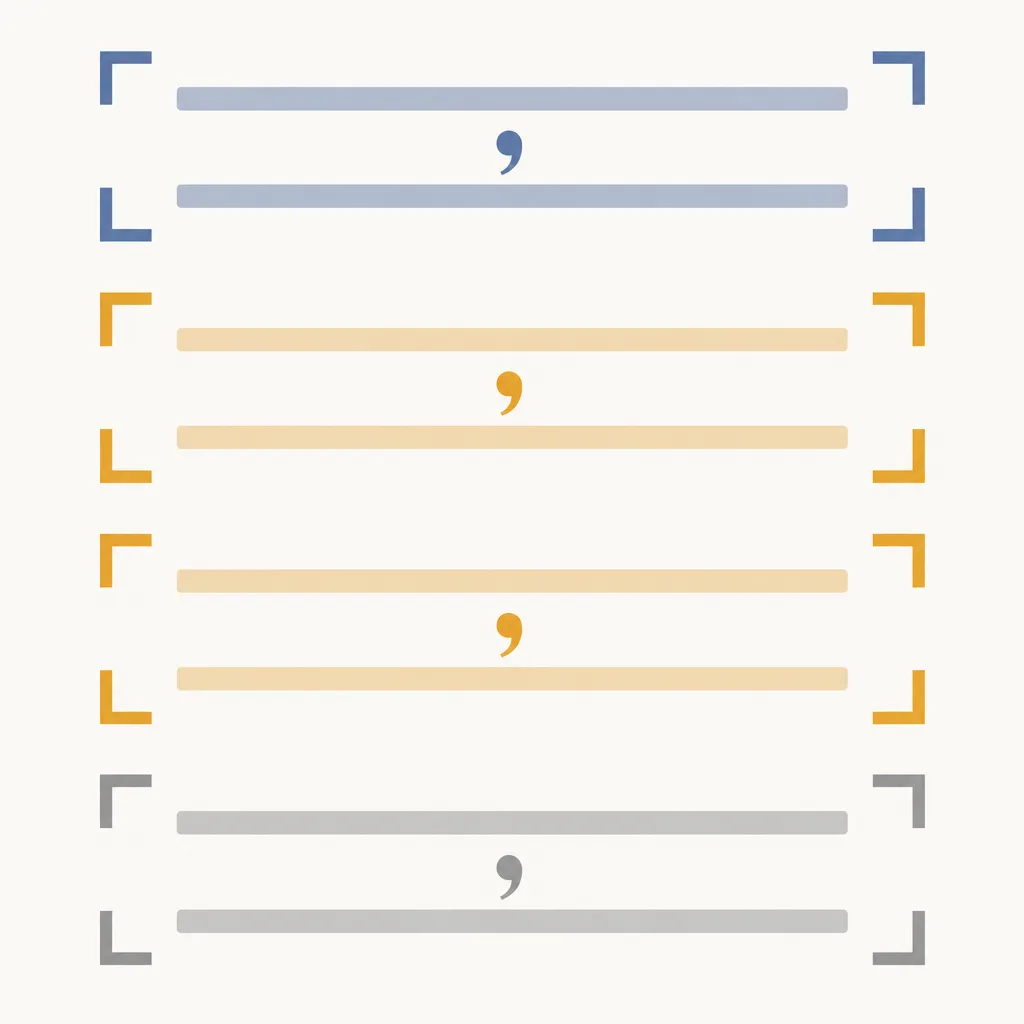
Rhyme is not decoration here, it is information. A predictable rhyme scheme tells the model where lines end and what shape the phrase has, which makes the whole section easier to set to music. But a rhyme achieved by mangling grammar tends to produce an odd delivery, because the model sings the strange word order as written.
| Technique | When it helps | When it hurts |
|---|---|---|
| End rhyme on open vowels | Almost always; it clarifies line endings. | When it pushes you into a word you would never say. |
| Assonance (matching vowel sounds) | When exact rhyme is straining; keeps cohesion without contortion. | When overdone, lines start to sound like tongue-twisters. |
| Verbatim repetition of the hook | Choruses and outros; repetition is what makes a hook land. | In verses, where it reads as running out of ideas. |
| Internal rhyme inside a line | Dense styles that can carry the syllables. | Sparse styles, where it crowds the phrase budget. |
| Forced or near-miss rhyme | Rarely. | Almost always; prefer a clean unrhymed line. |
A useful habit: write the chorus first, in the plainest words possible, then let the verses serve it. The chorus is what gets repeated, so it is also the section where a small phrasing problem gets repeated most often.
The one-breath test: a copy-paste checklist
Run this over a draft before you generate. It takes two or three minutes and it catches nearly everything in this guide.
1. Read each line aloud in one breath. Rewrite any line you cannot finish.
2. Count syllables per line. Land in the band for your style.
3. Check that lines inside each section are within two syllables of each other.
4. Flag every invented word, brand, acronym, and number. Respell each one.
5. Start each line on a vowel or a single consonant, not a cluster.
6. End each line on an open vowel or a soft nasal.
7. Put a comma where a singer would breathe; break lines at phrase ends.
8. Add [Verse] / [Chorus] / [Bridge] / [Outro] tags. Repeat the chorus verbatim.
9. Delete anything in the lyric field that is not meant to be sung.
10. Generate once, listen only for clarity, then fix the two worst lines.
Step 10 matters more than it looks. If you change eight things at once you will not learn which one worked, and next month you will be guessing again. Change the two worst lines, regenerate, and compare.
A worked rewrite, line by line
Here is what the rules do to a real draft line. The left column is the kind of line people write first; the right column is the same idea after the checklist.
| Before | Why it fails | After |
|---|---|---|
| Strength and struggle through the splintered night | Two consonant clusters at the opening, a closed -ngth ending, dense sibilants. | Alone again, and holding on tonight |
| I keep remembering everything we used to be | Eleven syllables of mostly function words, no comma, no phrase end. | I remember, still, / the way we used to be |
| Neon lights streak past the shattered glass | Str- onset, three sibilants in one line, consonant-heavy ending. | Neon passing, / amber in the rain |
| 2024 was the year the city changed | A year read as digits, plus a clause with no breath mark. | Twenty-four, / the city turned around |
| You are the only one who understands me completely | Twelve syllables, a closed ending, three unstressed filler words. | Only you, / and you know why |
The pattern across all five is the same: fewer syllables, fewer consonants, and a comma or a line break in the middle. Nothing about the ideas has changed.
When the lyric is not the problem
Sometimes a clean lyric still comes out unclear, and the cause is elsewhere. Before you rewrite a fifth draft, check these:
- The arrangement is too dense for the vocal. A wall of distorted guitars or a busy synth pattern will bury any voice. Try a sparser style tag before touching the words.
- The style tag contradicts the lyric. Whispered intimacy and a belted chorus are different deliveries; the model cannot do both at once.
- The section is too long for the lyric you gave it. Four lines asked to fill ninety seconds will be stretched, repeated, or padded. Add words or shorten the section.
- The language does not match the model's training. English-trained voices handle English best, and other languages may drift in accent or vowel shape. If a non-English line keeps failing a clarity check, that is the likely cause.
- You are regenerating instead of editing. If nine tenths of a take is clear and one line is not, fix that line and regenerate the section rather than rolling the whole song again.
If you want to go deeper on the delivery side rather than the writing side, the fixes in Why Your AI Vocals Sound Fake start where this guide ends. And if the words themselves are the bottleneck rather than their shape, the genre and mood patterns in AI Music Generator Prompts will give you somewhere to start.
Once a lyric passes the checklist, the fastest way to hear whether it works is to run it through a generator that takes full lyric input rather than a short description. AI Song Maker accepts structured lyrics with section tags, so you can test the same words across styles without rewriting them each time.
Common questions
How many syllables should one line have?
Aim for six to ten for a standard sung pop line, five to eight for slow or sparse styles, and eight to twelve for storytelling styles where the line is clearly punctuated. Rap and spoken cadence are the deliberate exception and can carry far more. Count by speaking the line out loud rather than by counting words, and keep lines within a section close to each other in length.
Why does the AI cut off my long lines?
Because the melodic phrase it generated does not have room for all the syllables you supplied. The model has to drop something, and the end of the line is what goes first. Shortening the line into the band for your style, or splitting it into two lines with a break between, fixes it without changing the idea.
Can AI sing made-up words and brand names?
It can, but only if you tell it how they sound. An invented name with no learned pronunciation gets an arbitrary guess, which is why one nonsense word survives in an otherwise clean vocal. Respell the word phonetically in the lyric you submit, keep your intended spelling for release metadata, and check whether your generator documents a bracketed pronunciation hint.
Should I rhyme, and how strictly?
Rhyme helps, because predictable line endings tell the model where phrases stop. Use end rhyme on open vowels and fall back to assonance when exact rhyme forces you into an unnatural word. A clean unrhymed line beats a forced rhyme every time, and the chorus should be repeated verbatim rather than paraphrased.
Does punctuation really change the singing?
Yes. A comma is a short breath, a line break ends a musical phrase, a period is a longer stop, and capitalisation adds emphasis. On a lyric with no punctuation at all, the model has to guess your phrasing and usually guesses wrong. Adding commas where you would breathe is the cheapest clarity improvement available.
Can I write lyrics in a language other than English?
Often yes, and many generators support several languages, but clarity varies. A voice trained mostly on English handles English vowels and consonant patterns most reliably, and other languages may come back with an accent or a drifted vowel shape. Test one line in your target language before committing a full song to it.
Should I put style instructions inside the lyric field?
No. Anything in the lyric field is a candidate for being sung, so notes about mood, tempo, or instrumentation may end up as spoken or sung words. Put style direction in the style or description field your generator provides, and keep the lyric field for words you actually want to hear.
Bottom line: short vowel-forward lines, six to ten syllables, one breath each, section tags at the top, commas where you inhale, and every invented word respelled the way it sounds. Do that before you generate and you will spend far fewer generations getting a vocal you can actually understand.