AI Rap Lyrics Generator: Make the Verse Yours Before You Generate the Track

Use an AI rap lyrics generator to draft a short verse from a clear scene, then revise the words you cannot deliver naturally. Tell it who is speaking, what happens, which details must stay and what kind of energy you want. Read the draft over your intended beat before making a full track. A rhyme on the page does not establish that the delivery will work.
Published 28 October 2026. The five before-and-after exercises below are original, fictional examples written for this guide. They are not outputs from a music service, recordings of a rapper, or measured product results. This is a writing guide, not a generator form.
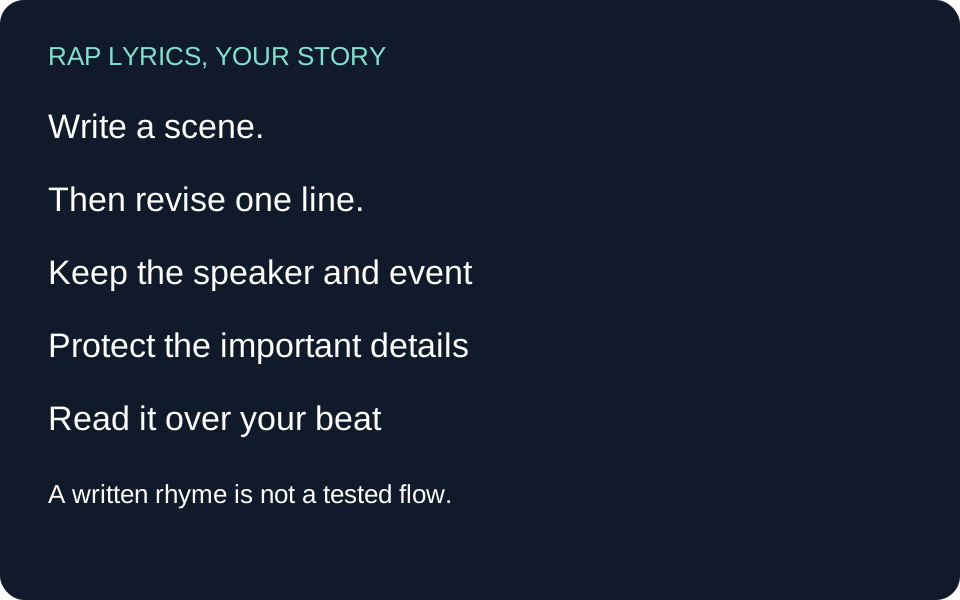
Start with a scene instead of an artist name
Try this brief: “Write a short first-person rap verse about reopening a bicycle repair shop after a rainy week. Keep the dented blue door and the repaired red bicycle. Use conversational language and a hopeful, unhurried delivery. Give me a draft I can revise, with line breaks.” You have supplied a speaker, an event and details that can survive a rewrite. You can change the energy without asking for a particular performer's identity.
Choose a lyrics workspace when you want editable words first. Choose a song workflow when you are ready to hear an arrangement and vocal. Keep the lyric draft outside the tool so that generating another take does not erase your reference. If a form offers rhyme or genre settings, use them as instructions to try, not proof that the resulting verse will match your delivery.
Five original revision exercises
1. Replace a vague boast with something you can picture
Draft:
I chase the dream, I claim the crown
I rise above this sleepy town
Revision:
I lift the shutter, rain rolls down
My red bike wakes this sleepy town
Brief: The narrator is reopening the bicycle shop, not winning a contest. Keep the rainy morning and give the listener an action. What changed: “Lift the shutter” establishes a place and a task; the bicycle belongs to that scene. The end rhyme stays available without carrying the whole idea. Try it: Ask for two alternatives to the first line while keeping the second line unchanged. Read both in the same passage of your beat. Decision: Keep the version that tells the right story and feels natural to say. A more detailed sentence is not automatically a better bar; if the image distracts from your intended story, choose a different concrete action.
2. Shorten a crowded thought without losing its point
Draft:
I am patiently repairing every little broken thing you left behind
While the morning keeps on running through the corners of my mind
Revision:
I fix the wheel you left behind
The morning turns; I take my time
Brief: Make the delivery less crowded while preserving the act of repair and a patient narrator. What changed: The revised pair removes abstract filler and names one object. It also changes the rhyme, so the revision must be judged as a new pair rather than a mechanically shortened original. Try it: Speak each version over the same loop at your intended pace. Mark where you rush or drop a word. Decision: Revise the rushed phrase first. Do not assume a fixed word or syllable count fits every rap delivery. This example has not been recorded or aligned to a beat; your spoken test supplies that missing evidence.
3. Keep the fact when a convenient rhyme changes it
Draft:
We opened up the shop in June
And sold the red bike that afternoon
Revision:
We opened in July, the rain was through
Returned the red bike, riding like new
Brief: The fictional story says July, and the bike belongs to a customer. It was repaired and returned, never sold. What changed: Both the date and the action are corrected, even though that means abandoning the earlier rhyme pair. Try it: Give the generator a short protected-facts list: “July; customer owns the red bike; return it after repair.” Request a rewrite, then check the actual lines against that list. Decision: Reject a smooth verse that still describes a sale. Exact word matching alone would also be insufficient: a line can include “July” while assigning the event to somebody else. Review meaning as well as the named details.
4. Let the hook carry one idea
Draft:
We mend the wheels and pay the bills and chase the sun and climb the hills
We find the road and bear the load and learn the things the journey builds
Revision:
One more wheel, one more ride
Leave the rainy week outside
Brief: Give the song a small, repeatable invitation rather than a summary of every theme. What changed: The shorter hook returns to the shop's central action and the weather in the opening scene. This is an option, not a rule that all hooks should be short. Try it: Keep the verse fixed and compare this hook with a second hook that uses the same scene but a different central phrase. Decision: Choose what you want the listener to remember. A catchy line that pulls the song away from its subject can be saved for another song instead of forcing the verse to explain it.
5. Separate a text improvement from a better performance
Draft:
The dented blue door opens wide
I roll the red bike back outside
Revision:
Blue door swings; the rain has gone
Red wheels turn; the day rolls on
Brief: Explore a more clipped delivery without changing the scene. What changed: Shorter clauses create possible pauses, but the revision drops the dent in the door and makes the customer's return less explicit. Try it: Keep both drafts. If that dent is a protected story detail, restore it before generating music. If you generate two takes, compare the same passage and note any changed words separately from your preference for the voice or beat. Decision: A take can sound exciting while failing the lyric brief. Keep distinct notes for story, spoken comfort and the generated performance. Do not call the text revision a tested improvement until you have tried it in the intended delivery.
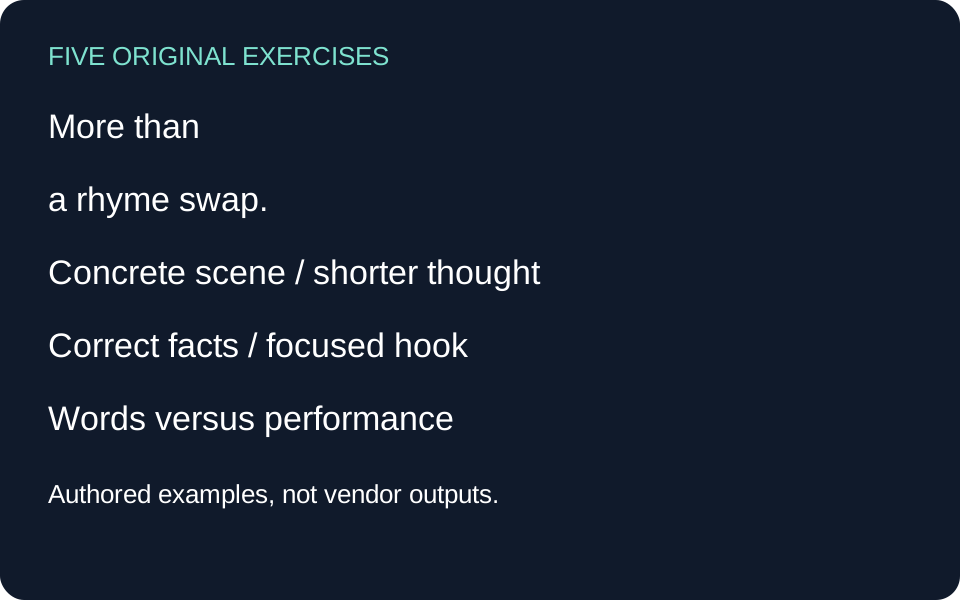
A reusable prompt and a small revision record
Prompt: “Write a short rap verse about [specific event], spoken by [narrator]. Keep [details]. Aim for [energy and delivery]. Avoid [unwanted clichés or wording]. Show the lyrics with line breaks. After the draft, give two alternatives for the one line I select; leave the other lines unchanged.” Replace the brackets with your own choices before submitting. A tool may still change protected lines, so compare its answer with your saved draft.
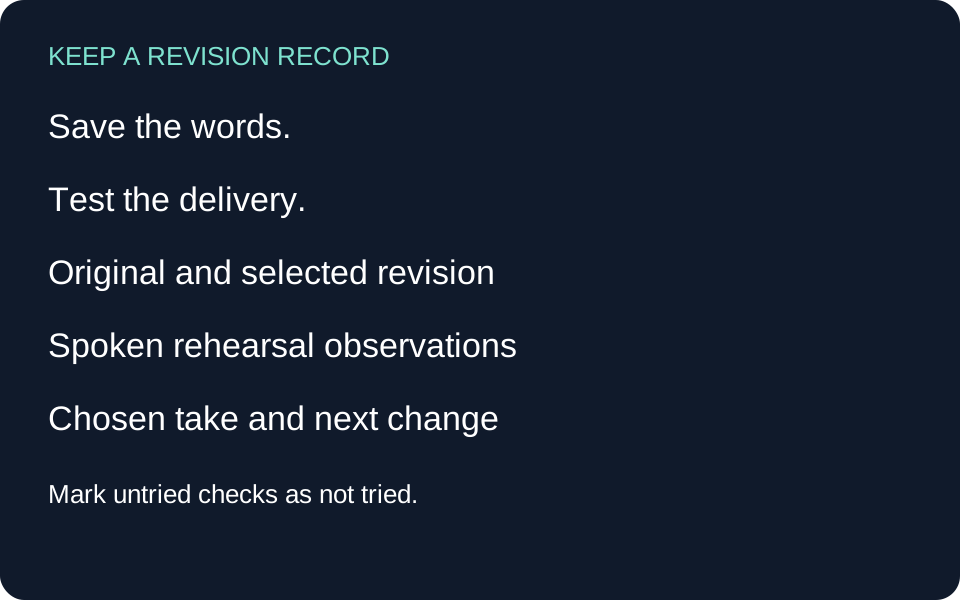
Record the brief, the original text, the selected revision and why you kept it. Add a separate note after a spoken rehearsal or a generated take. If you have not performed that check, write “not tried” rather than claiming the flow works. Download the blank record below and keep your chosen lyric version beside any finished audio.
Questions before generating a full track
Does a rap lyrics generator also make audio?
That depends on the workspace. An editable lyric result is enough for the writing stage. Look for a distinct music-generation step if you want a vocal and backing track; do not mistake a text preview for a completed song.
Should every line end in a rhyme?
Choose the pattern for the passage you are writing. For this exercise, a clear event and a delivery you can sustain are more useful starting decisions than forcing a new end rhyme into every line. Try the passage aloud before adding more rhyme constraints.
Can I bring my own lyrics into a song generator?
Check the current tool for a custom-lyrics input. Keep the exact accepted text and compare the resulting vocal against it. Our own-lyrics guide walks through that handoff with separate original exercises.
What should I do when the verse sounds generic?
Replace one general statement with a scene-specific action, object or consequence. Ask for alternatives to that line only. Keep the rest of the draft fixed so you can identify what the revision actually changed.
Is the most polished draft always the one to keep?
No. Choose against your brief: the right speaker, correct events, words you can deliver and a hook that fits the song. A polished alternative can remain in your notes without replacing the version that serves your purpose.
Download five original exercises · Download the revision record