AI Song Lyrics Generator: Build a Song That Moves Beyond the First Verse

Start with one scene, decide what the chorus means, and give each new section a different job. An AI song lyrics generator can help you draft those sections, but a full page of rhymes is not necessarily a complete song. Write down who is speaking, what changes and what must stay true. Ask for a small draft, revise the transition, then save the words before moving to audio generation.
Published 30 October 2026. The five fictional examples below are original writing exercises authored for AISongMakerLab. Prompts, sample lines and revisions are our own; they are not outputs from a tested vendor. This is a writing guide with downloadable exercises, not an embedded generation service.
Start with a story and a section map
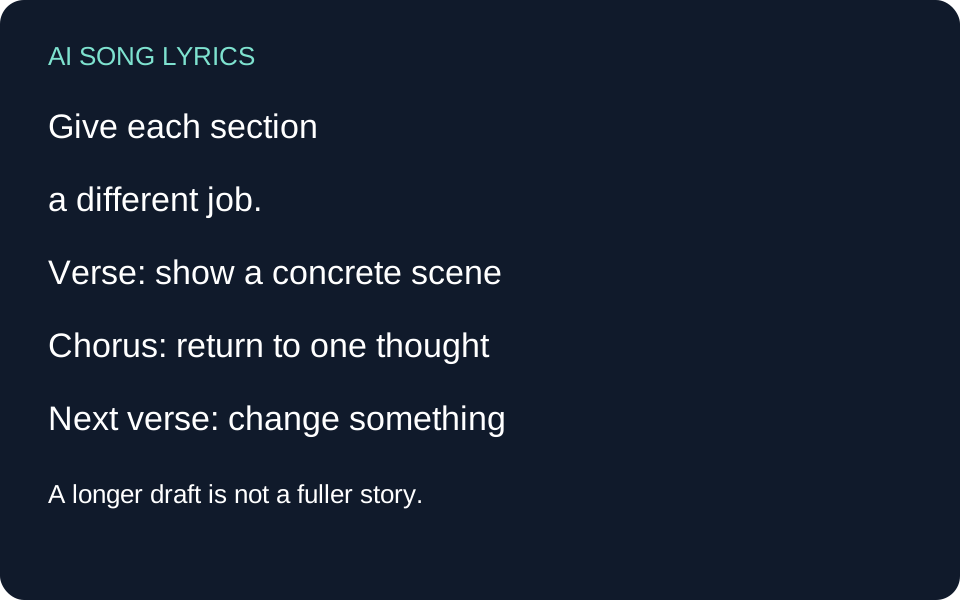
Choose a concrete event you can describe in one sentence. Give the first verse a scene, the chorus a central thought, the second verse new information and the bridge a changed perspective. You can leave sections out when your song does not need them. The map is a planning aid, not a required formula or a claim that every genre uses the same arrangement.
For an available starting interface, OpenMusic's public lyrics page presents a prompt field and options for mood, structure, style and language. Open the lyrics workspace to check the controls and account conditions yourself. We inspected the public page on 30 October; we did not generate these examples there or verify its paid or free allowances. If you already have a lyric generator that accepts instructions, the same exercises can help you describe your intent.
Keep the story brief separate from the words intended to be sung. A useful starting brief names the speaker, event, mood and requested section. Avoid burying those decisions under a long list of adjectives. Save the input and response together so you can tell which part of a later revision actually changed.
Five original section-building exercises
1. Give the opening verse something the listener can see
The story: A daughter helps her father close their bicycle repair shop for the last time. They are retiring, not being evicted. The first verse needs to establish the place before explaining how everyone feels.
A broad authored draft:
We had a life, we had a dream
Now nothing stays the way it seems
The lines could belong to many unrelated songs. A revision can make this particular scene visible without adding a new event.
Copyable prompt: “Write a four-line first verse in the daughter's voice. She and her father are closing their bicycle repair shop because he is retiring. Include the bell above the door and a blue repair stand. Keep the feeling affectionate but uncertain. Do not add a chorus or suggest that the business was forced to close.”
One authored direction:
I lift the bell above the door
You sweep the spokes across the floor
The blue stand waits without a wheel
We leave the last light on until
The unfinished final phrase creates a possible transition, but it also needs a deliberate continuation. It is not automatically better than a closed sentence. Next action: Decide whether the following section completes that thought. If it does not, finish the line before accepting this verse. Check that concrete details clarify the story instead of merely decorating it.
2. Make the chorus carry a thought, not a summary
The story: Two adult siblings are reopening their grandmother's kitchen to cook together after years apart. The chorus should express renewed connection without claiming that the grandmother is present.
An authored summary draft:
We came back home to cook today
We found the pots and cleared the way
That explains the action. It does not yet give the song a thought worth returning to.
Copyable prompt: “Suggest a short chorus for two siblings cooking again in their grandmother's old kitchen. Make the recurring idea that they can begin a new tradition together. Do not imply that their grandmother is in the room. Use everyday words and leave detailed cooking actions for the verses.”
One authored direction:
We can begin with what we know
A place for you, a flame kept low
The table has an empty chair
And room for something new to share
The empty chair leaves the absence visible; the last line looks forward. Next action: Read the chorus after a specific verse. If every line repeats facts the verse already established, revise toward the central feeling. If a phrase sounds good but changes who is present, flag the story change before choosing it. Repetition can make a hook recognizable, but repetition alone does not supply its meaning.
3. Let the second verse change the situation
The story: A volunteer repairs a neglected community noticeboard. Verse one ends after removing old paper. A second verse that describes more dusty paper will keep the story in the same place.
A stalled authored draft:
Another sheet falls to the ground
More faded letters gather round
Copyable prompt: “Write only a second verse. In verse one, I removed old notices from a community board. Now a neighbor arrives with the first new announcement: a Saturday seed exchange. Show that small change without claiming the whole neighborhood has already joined. Keep first-person narration.”
One authored direction:
You bring a note in careful blue
Saturday seeds, a place, a few
I hold the corner while you pin
The first small plan we can begin
The arrival of another person gives the second verse new information. It remains a modest beginning rather than an invented success story. Next action: Write a one-sentence description of what changed between verses. If both sentences describe the same situation, ask for progression instead of more synonyms. Save the first verse so a rewrite does not silently move its event into the second.
4. Use the bridge to change the view of an existing detail
The story: A person has spent the song packing a childhood room. A small mark beside the door records their height as a child. The bridge should reconsider what leaving means, without inventing a return or canceling the move.
A redundant authored bridge:
I pack the box and close the door
I cannot stay here anymore
It repeats the action already covered in the verses.
Copyable prompt: “Draft a two-line bridge for a song about moving out of a childhood home. Reinterpret the old height mark beside the door as something I can carry in memory. I am still moving. Do not add a flashback scene, a new character or a promise to return.”
One authored direction:
That pencil line can stay behind
I take the growing, not the sign
This is a change in perspective, not a new physical event. Next action: Compare the bridge with the chorus. It should make the next chorus feel a little different because the speaker has reconsidered something. If it only restates the departure, try removing the bridge and listening to the transition. A shorter structure may serve the story better than another section added for completeness.
5. Make the ending reflect what changed
The story: A new gardener initially waits for someone else to tell them how to start. By the final section, they have planted the first row. The ending should show that decision without claiming that the garden has already grown.
Original opening thought:
I wait beside the folded spade
For someone else's plans to be made
Copyable prompt: “Write a two-line ending that answers the opening below. By now I have planted one row myself. Keep the spade as a recurring object. Do not describe flowers, a harvest or another person's approval. The change is that I began.”
One authored direction:
I set the spade beside the row
The ground is quiet; I let it grow
The ending returns to an object from the opening while changing the speaker's relationship to it. The outcome is still open. Next action: List the facts that are true at the end and compare them with the last two lines. An uplifting ending can accidentally skip ahead months. Keep the uncertainty if that is part of the song. This exercise concerns narrative choices, not a measured claim about a model's ability to follow a timeline.
A reusable section record
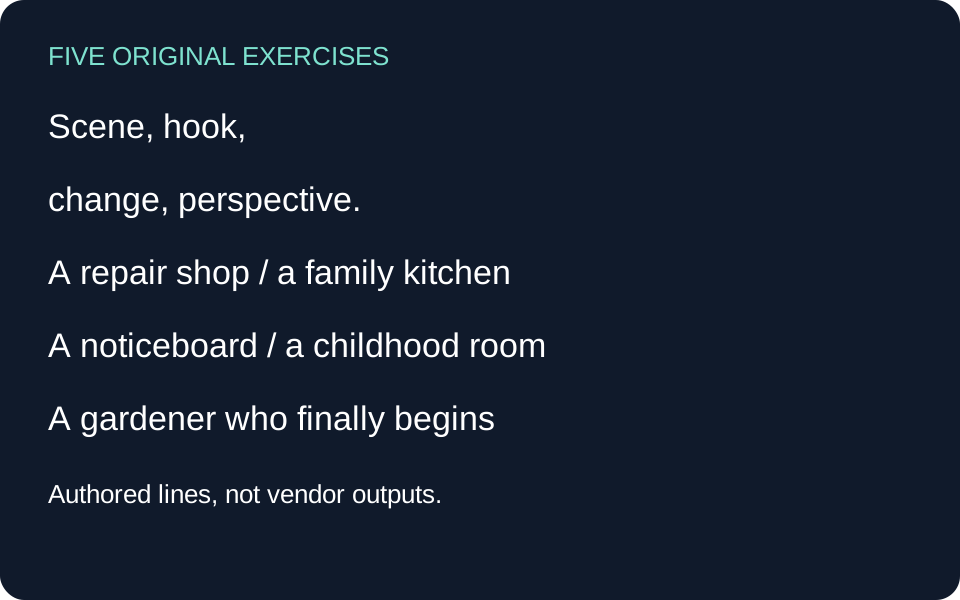
Before generating, record the speaker, starting event, central chorus thought and intended change. After generating, label what each section actually contributes. Keep accepted lines in a separate saved draft. Ask for one revision with a clear boundary: which section may change, which facts must remain and which lines are already chosen.
Read transitions aloud. A verse can work on its own while leading awkwardly into a chorus. Separate a story problem from a delivery problem: a missing event needs writing; an overcrowded sung line may need fewer words or a different musical phrase. Do not assume that a text-only review predicts the final vocal performance.
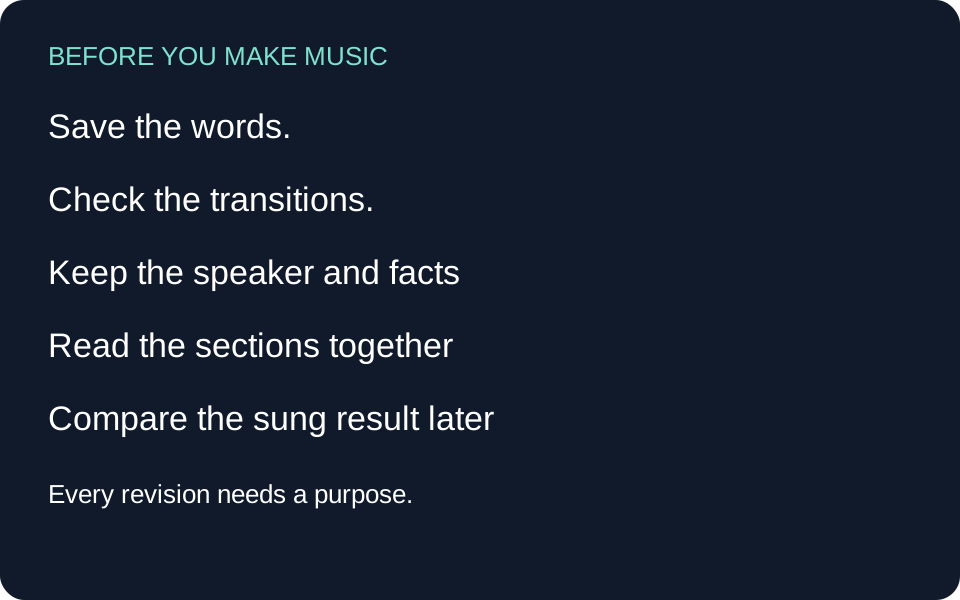
When your lyric draft is ready, use a music workflow that accepts your own words and keep the arrangement instructions separate. Save the exact submitted text. Compare the resulting sung words with that version before accepting the audio. This guide does not rank tools or promise that a generator will preserve every requested line.
Questions before you generate a full lyric
Is a song lyrics generator the same as a song generator?
Not necessarily. A lyrics workflow may produce editable words only. A sung track needs a separate audio-generation or recording stage. Check the actual output offered by your chosen tool.
Should I request the entire song at once?
You can, especially when exploring a new idea. When you already know the story, drafting and revising sections separately can make changes easier to inspect. Keep a full saved version for checking continuity.
Does every song need a bridge?
No. Add one when a new perspective or contrast helps the song. If it repeats what listeners already know, try the structure without it rather than filling space.
How much should I put in the prompt?
Include the decisions that matter: speaker, event, requested section and important boundaries. Start with a short brief you can evaluate. Add detail to resolve a specific problem, not merely to make the prompt longer.
When should I stop rewriting?
Stop when each chosen section has a useful role, the story remains consistent and you can name the version you want to take into music. Save alternatives separately. Further rewriting should address a specific issue you can hear or explain.
Download five original exercises · Download the revision record